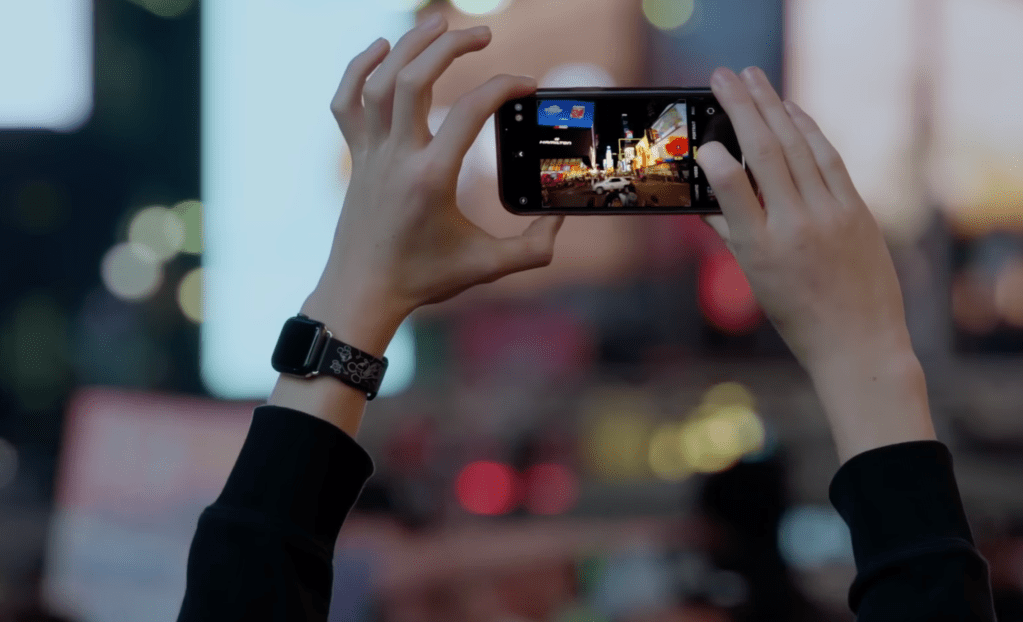
In HBO’s doc Surveilled (2024), directors Matthew O’Neill and Perri Peltz deliver a somewhat lukewarm story, presented by Pulitzer Prize winning journalist Ronan Farrow, who is nevertheless hot on the trail of Pegasus, a commercial spyware developed by the Israeli company the NSO Group, and allegedly sold exclusively to world governments. Devised for use against criminals and terrorists, it is also apparently utilised to target activists, politicians, journalists, their families, or any ordinary citizen that seems to ‘fall out of line’.
The theme is entirely engrossing, so despite the unfortunate news format and pedestrian pacing of the doc, it should easily be able to raise significant concern with anyone in possession of a smartphone, i.e. most people.
In an inquiry spanning two years, and published in The New Yorker, Farrow, being famously a target of surveillance himself, travels from Israel, to Spain, to Washington D.C., to figure out exactly what turning our phones into spying devices for authorities (willing to pay a hefty multimillion dollar price) actually entails. For the non-tech savvy person, its seems to be a puzzle, this cracking of our apps in order to penetrate in and out of our mobiles, in an instant, and without a trace, switching on cameras and voice recorders, undetected. Or almost undetected, as fragments of the invasion can be found by (what could only be dubbed) cyber detectives.
Yet, in a particularly telling scene we find a man that just discovered his laptop was under spyware attack immediately wrap it in tinfoil, creating a Faraday cage — so the intruders would not be able to get away with the break-in leaving no trace. Low-tech winning over high-tech will perhaps save the day. Reverting to flip phones, or ditching all vulnerable devices, overall, finding alternate solutions, that might be the way to go, once we understand what exactly is at stake.
The idea of the omnipotent hack, the all-seeing eye, seems inevitable in the age of cyber crime, and the implementation almost immediately slipped into abuse, as was entirely expected. Starting with its weaponisation in the Israeli-Palestinian conflict, its reported use in the assassination of Saudi dissident journalist Jamal Khashoggi, all up to its dubious alleged utilisation across European democracies and the US at large. With global and national legal oversight still not fully in place (if it ever will be), we follow Farrow investigating the case of the Catalonia spyware scandal, the CatalanGate, where even a solid democratic country like Spain had been accused to have tapped into phones of separatist leaning politicians — as well as into the phones of their entirely non-political families. Potentially a breach of private records of gargantuan proportions.
The most intriguing part of the doc, for me, other than the tinfoil manoeuvre, is the straight-faced US official, a member of the House Intelligence Committee, balancing the dire side-effects of spyware privacy invasion with the ‘bad guys will also be using it’ trope.
Albeit being a lightweight documentary on an extremely heavyweight subject, Surveilled still deserves kudos on tackling this terrifying topic, and the endless dire implications abuse of spyware has for all humanity. However, its approach has too slick a touch, and its dignified, professional tone lacks the necessary dramatic tension this global invasion of privacy deserves (to be fair, the doc is advertised as a thriller).
As it ended up merely a companion piece to Farrow’s extensive investigation for The New Yorker, perhaps I was unrealistically expecting it to be more than it is. Or, maybe, just lamenting on what it should have been, given the talent and the resources involved.
★★☆☆☆
Author: ©Milana Vujkov
 Lola On Film