Emerald Fennell‘s lavish, lustful and at times slightly ludicrous “Wuthering Heights” (2026), quotation marks intended, see the director of the brilliant debut Promising Young Woman (2020) fall further into aesthetic stupor, one that her second feature Saltburn (2023) inaugurated, with its OTT ornateness and theatrical decadence — yet still holding a compelling story within.
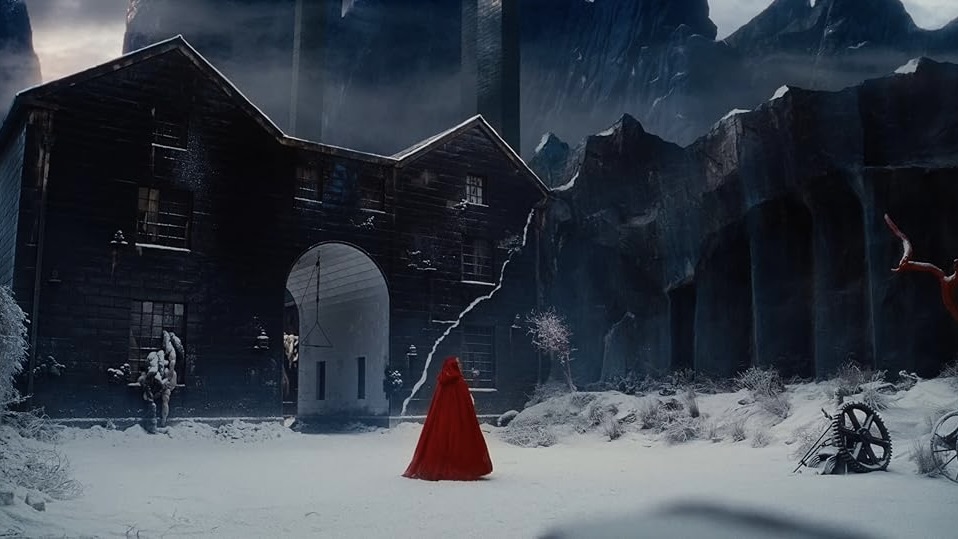
However, in this highly anticipated new version of “Heights”, the dark seminal Brontë tale of star-crossed young lovers is interpreted as an immaculately stage-designed Vogue fashion spread (production design Suzie Davies, costumes Jacqueline Durran), an abridged Instagram reel of the Gothic love tragedy (or a sleek, kinky marketing campaign of the same) — slow in character development, but strong on image and whimsy (shades of Sofia Coppola’s 2006 delight Marie Antoinette), stretching the presented thespian muscles from A to B, and back, which is a shame, because the acting talent at hand does have some chops, and was, in moments, actually moving.
At the same time, reinventing the beloved story of Catherine Earnshaw and her Heathcliff, amidst the Yorkshire moors of yore, with a miscast lead, presents perhaps the greatest fault of Fennell’s ambitious take. While Margot Robbie shines in almost all other roles I watched her in (a favourite being 2017 I, Tonya), this one was simply not the right fit, in age, disposition, and just personal vibes, although the producer (also Robbie), perhaps very much desired it to be. The charismatic, perfectly-groomed 35 year-old was a strange choice in too many ways to convey a troubled, stubborn and lovelorn late 18th century teen, and although the counterintuitive casting might have provided results in a different, less period-heavy set, here it just emphasises its inauthenticity.
Jacob Elordi as the brooding Heathcliff is slightly more of a good choice, also too mature for the character he portrays, but just the right side of painfully enamoured, yet brutish, his wild tall frame in constant rebellion to his subservient position in the Earnshaw household, while Hong Chau, as Nelly, elegantly conveys the quiet desperation of an intelligent woman in a lowly station, a pragmatic sense of necessity, and an imperious, seething resentment at her employers. They both would have had so much more to work with had not the story been so entirely constrained by its stylisation (and cast with a different lead).
The standout of Fennell’s “Wuthering Heights” is Alison Oliver as Isabella, the ward of wealthy neighbour Edgar Linton (Shazad Latif, with too little to do) whom Cathy lovelessly marries, and the love-crazed young bride of the newly minted Heathcliff, who abuses her. Oliver is also the best casting choice of the production (casting director Kharmel Cochrane), along with the flawless Martin Clunes as the violently moody alcoholic Mr. Earnshaw, Cathy’s father, and Heathcliff’s cruel patron.
Alison Oliver plays Isabella outrageously and fiercely as a naive yet deviant presence, and offers the correct tonal balance for the entire film — if only it landed as an irreverent, artsy, bodice-ripper reading of an old tale of passion and class (as most likely intended), and not a Millennial eye-candy celebration of opulent Gothic visuals, as it turned out to be.
★★☆☆☆
Author: ©Milana Vujkov

